
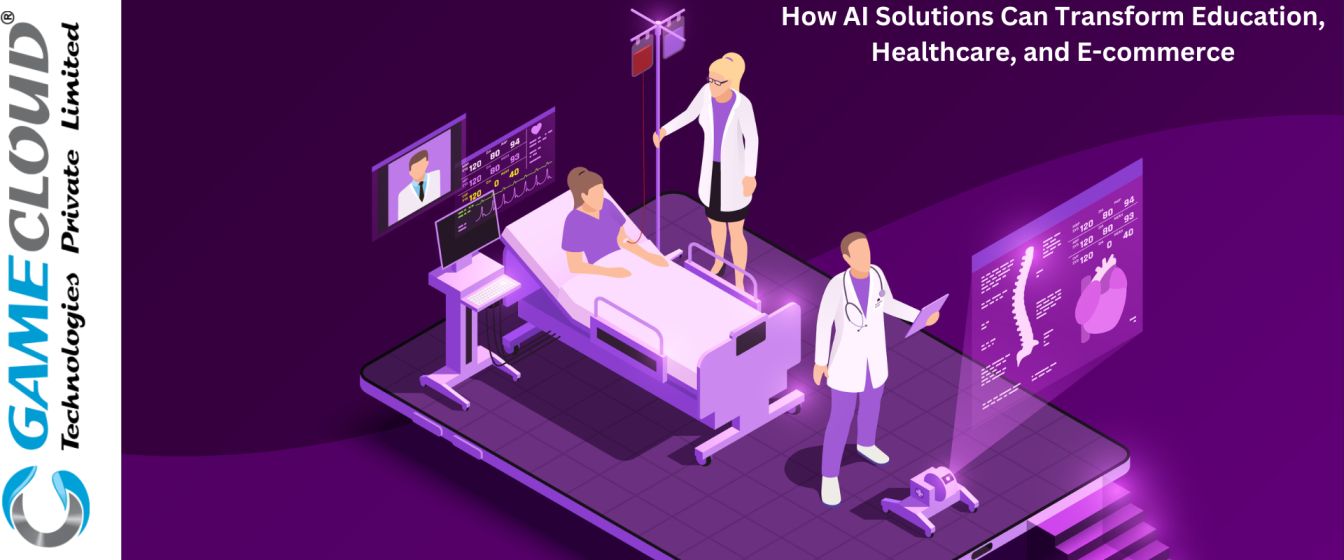
Artificial Intelligence in Education
Artificial Intelligence (AI) solutions are revolutionising education by offering personalised learning experiences, making education more accessible, and creating immersive learning environments. AI can track students' progress, identify strengths and weaknesses, and tailor learning plans to individual needs. Additionally, AI automates tasks like grading, organising research papers, and maintaining reports, enhancing productivity in educational settings. Moreover, AI enables smart content creation, such as visualisations and digital lessons, improving the quality of educational materials. Furthermore, AI tools like ChatGPT can assist educators and students by fostering critical thinking and providing personalised feedback. Overall, AI has the potential to make education more inclusive, effective, and engaging for all students. Here are some ways AI can be used to enhance accessibility in education:- Adaptive Learning: AI-powered adaptive learning platforms can analyse student data and provide personalised content, resources, and activities that align with their specific needs. These platforms can adapt to each student's progress and adjust the learning material accordingly, ensuring that students receive content that is appropriate for their learning style and pace.
- Intelligent Tutoring Systems: AI-driven tutoring systems can provide individualised guidance and support to students, assessing their understanding and offering targeted explanations, feedback, and practice exercises. These systems can adapt to each student's progress and adjust the learning material accordingly, ensuring that students receive personalised support.
- Accessible Content: AI can help make educational content more accessible for students with visual impairments by extracting text from PDFs for screen readers and providing real-time captions for students who are deaf or hard of hearing. AI can also improve alt text for images and ensure greater accuracy with closed captioning, creating consistent icons for online navigation, and enhancing learning for all students.
- Data-Driven Insights: AI can help educators gather and analyse large amounts of student data, such as assessment results, engagement levels, and behaviour patterns, to gain a deeper understanding of individual students. This information can be used to personalise learning and make informed decisions to support students' learning outcomes.
- Multimodal Learning: AI technologies facilitate multimodal learning experiences by incorporating various formats, such as text, audio, video, and interactive elements. This allows students to engage with content in ways that suit their learning preferences, making the educational experience more personalised and engaging.
- Individualised Learning Paths: AI-powered platforms can generate individualised learning paths for students based on their goals, interests, and prior knowledge. By adapting the curriculum and pace to meet the needs of each student, AI ensures that they receive appropriate challenges and support, maximising their learning outcomes.
- Cognii: Cognii is a leading provider of educational technologies based on Artificial Intelligence. Their Virtual Learning Assistant engages students in real-time natural language conversations to facilitate learning, comprehension assessment, and concept mastery.
- Learnswell: Formerly known as SelfStudy, Inc., Learnswell uses advanced AI and deep learning to provide personalised learning experiences. By creating atomic-state learning objects from existing courses, videos, or documents, Learnswell delivers tailored learning experiences to users based on their knowledge, goals, engagement, confidence, and relevance.
- Trivie: Trivie utilises AI to transform any content into engaging assessments, going beyond traditional Learning Management Systems. Through Trivie AI, content experts create quizzes using knowledge extraction AI, ensuring impactful learning experiences for users.
Artificial Intelligence in Healthcare
AI solutions have revolutionised the healthcare industry by offering advanced tools and technologies that enhance patient care, streamline operations, and improve outcomes. One significant application of AI in healthcare is in diagnostics, where machine learning algorithms can analyse medical images, such as X-rays and MRIs, to assist radiologists in detecting abnormalities with greater accuracy and efficiency. This not only speeds up the diagnostic process but also reduces the chances of human error.Another area where AI is making a significant impact is in personalized medicine. By analyzing vast amounts of patient data, including genetic information and treatment outcomes, AI algorithms can help healthcare providers tailor treatments to individual patients, leading to more effective and targeted therapies. This personalized approach can improve patient outcomes and reduce the risk of adverse reactions to medications. AI-powered predictive analytics is also being used to forecast patient admissions, optimize resource allocation, and identify high-risk patients who may require proactive interventions. By analyzing historical data and real-time information, healthcare organizations can better manage their resources, improve operational efficiency, and ultimately enhance patient care. Furthermore, AI chatbots and virtual assistants are being deployed to provide round-the-clock support to patients, answer queries, schedule appointments, and offer basic medical advice. These virtual assistants not only improve patient engagement but also help alleviate the burden on healthcare staff by handling routine tasks efficiently. Artificial Intelligence (AI) is increasingly being utilized to enhance patient outcomes in healthcare through various applications. Here are some key ways AI can be used to improve patient outcomes:- Clinical Decision Support: AI algorithms analyze vast amounts of patient data to assist medical professionals in making more informed decisions at the point of care. These tools help in calculating risks for clinical deterioration, aiding in proactive patient management.
- Diagnostic and Imaging Assistance: AI plays a significant role in diagnostics, particularly in medical imaging. By processing large amounts of data from imaging procedures, AI helps in more accurate and timely diagnostics, such as detecting lung nodules on CT scans or abnormalities in other imaging modalities.
- Patient Safety Enhancement: AI systems evaluate data to produce insights, improve decision-making, and optimize health outcomes. They can enhance error detection, stratify patients, manage drug delivery, and identify early warning signs for better patient safety and care.
- Virtual Healthcare Assistance: AI-powered virtual assistants and chatbots provide personalized patient care, assist in identifying health issues based on symptoms, offer medical advice, remind patients to take medications, schedule appointments, and monitor vital signs. These tools reduce the workload on healthcare providers and improve patient outcomes by ensuring continuous support and access to healthcare services.
- Medication Optimization: AI algorithms can generate specific recommendations for individual patients based on their health conditions, medical history, and preferences. This personalized approach helps healthcare professionals optimize medication choices and dosages, leading to better treatment outcomes.
- Cybersecurity: While implementing AI in healthcare systems, it is crucial to address cybersecurity concerns to safeguard patient data and system integrity. Predictive algorithms can be employed to detect and prevent cyber threats, ensuring data privacy and system security.
- Clinical Decision Support Systems: These systems analyze patient data to assist healthcare providers in making informed decisions at the point of care, leading to proactive patient management and better treatment outcomes.
- Virtual Nursing Assistants: Virtual nursing assistants powered by AI technology interact with patients, monitor their health status, answer questions, and provide quick responses. These assistants enhance patient care by offering continuous support and communication, leading to improved patient outcomes and healthcare efficiency.
- AI-Powered Chatbots: Chatbots powered by AI technology help reduce the workload on healthcare providers by handling common questions, providing medical information to patients, and assisting with appointment scheduling. These tools streamline healthcare operations and improve patient access to care, ultimately enhancing patient outcomes.
- Remote Patient Monitoring Devices: Wearable devices equipped with AI technology enable remote monitoring of patients' vital signs like heart rate, glucose levels, and sleep patterns. Virtual nursing platforms use smart technology to monitor large numbers of patients, detect potential health issues, and provide automated messages to patients, improving patient care and outcomes.
How can AI be used to improve patient outcomes in cancer treatment?
AI can significantly enhance patient outcomes in cancer treatment through various applications. One key way AI is utilized is by providing Clinical Decision Support Systems (CDSS) that assist healthcare providers in making informed decisions at the point of care. These systems help predict treatment success, estimate patient prognosis, and optimize care delivery, ultimately leading to improved patient outcomes and increased provider efficiency.Moreover, AI-powered tools can aid in cancer diagnosis and screening by processing medical data to detect cancer, characterize patient prognosis, and optimize care delivery. By increasing system capacity, allocating resources effectively, and enhancing diagnostic accuracy, AI contributes to better patient outcomes and streamlined healthcare operations. Additionally, AI technologies like deep learning algorithms are used to predict treatment response and patient outcomes based on routine imaging data like CT and MRI scans. By automating processes that traditionally require human input, AI can provide personalized treatment plans, improve prognosis, and enhance treatment response prediction, ultimately leading to better patient outcomes and more efficient cancer care. In summary, AI in cancer treatment plays a crucial role in improving patient outcomes by providing decision support, enhancing diagnostic accuracy, predicting treatment response, and personalizing treatment plans. These AI applications not only optimize cancer care but also contribute to reducing diagnostic errors, improving cancer detection rates, and ultimately enhancing the quality of care and patient outcomes in oncology. Some specific AI-powered tools used in cancer treatment include:- Sybil: Developed and tested by a team at MIT and Mass General Cancer Center, Sybil is an AI tool trained on low-dose chest computed tomography scans to predict the risk of a patient developing lung cancer within six years. This tool aims to detect lung cancer early, making it more treatable and improving patient outcomes.
- Penny: An AI chatbot developed by Penn Medicine that exchanges text messages with patients to guide them through their treatment. This tool has shown high accuracy in interpreting messages and adherence rates, enhancing patient communication and support during cancer care.
- AI-Powered Imaging Analysis Platforms: AI algorithms are used to analyse medical images like mammograms, CT scans, and MRIs to detect subtle abnormalities that may be missed by human observers. These tools assist radiologists and oncologists in identifying anomalies, aiding in early cancer detection and improving patient outcomes.
Artificial Intelligence in E-Commerce
AI solutions have revolutionised the E-Commerce industry by offering advanced tools and technologies that enhance customer experience, optimise operations, and drive sales. One key application of AI in E-Commerce is personalized recommendations. By analyzing customer behaviour and preferences, AI algorithms can suggest relevant products, increasing the likelihood of a purchase. This not only improves customer satisfaction but also boosts sales and conversion rates. Another significant use of AI in E-Commerce is chatbots and virtual assistants. These AI-powered tools can provide real-time customer support, answer queries, and guide users through the purchasing process. By offering personalized assistance 24/7, businesses can improve customer service, reduce response times, and enhance overall user experience. AI also plays a crucial role in inventory management and demand forecasting. By analyzing historical data, market trends, and external factors, AI algorithms can predict demand, optimize inventory levels, and prevent stockouts or overstock situations. This helps E-Commerce businesses streamline their operations, reduce costs, and improve efficiency. Fraud detection is another area where AI excels in the E-Commerce sector. AI algorithms can analyse vast amounts of data in real-time to identify suspicious activities, detect fraudulent transactions, and protect both businesses and customers from cyber threats. By implementing AI-powered fraud detection systems, E-Commerce companies can safeguard their operations and build trust with their customers.Some examples of AI-powered product recommendations in E-Commerce include:- Personalised Product Recommendations: AI analyses customer data like browsing history and purchase behaviour to provide tailored product suggestions. For instance, online fashion retailers offer features like "shop the look," recommending outfits based on customer preferences and past purchases.
- Customer Segmentation: AI enables retailers to automate customer segmentation, revealing hidden insights in data and creating accurate audience profiles. This personalised approach enhances campaign effectiveness and can lead to a significant increase in revenue.
- Conversational Commerce: AI-powered chatbots offer 24/7 customer support, guiding users through the buying process and providing personalized assistance. These chatbots enhance customer service, improve user experience, and support omnichannel marketing strategies.
- Voice Search Optimisation: AI facilitates voice search capabilities, making it easier for visually impaired customers to navigate online shopping platforms. Retailers can optimise their websites for voice search, similar to SEO practices, to enhance accessibility and improve the shopping experience.
- Predictive Analytics for Inventory Management: AI-driven predictive analytics help optimize inventory levels by forecasting demand accurately. This minimizes stockouts and overstock situations, leading to cost savings and improved customer satisfaction.
How do AI-powered product recommendations work in e-commerce?
AI-powered product recommendations in E-Commerce work by leveraging algorithms that analyze customer behaviour, preferences, and past interactions with online stores to suggest relevant products. The process involves several key steps:- Data Collection: E-commerce platforms gather extensive data on customer behaviour, including browsing history, purchase history, search queries, demographics, reviews, and ratings.
- Data Processing: Once collected, this data is processed and organized. AI/ML models use this information as the foundation for making personalized product recommendations.
- Recommendation Algorithms: There are various types of recommendation models used in E-Commerce, such as Collaborative Filtering, Content-Based Filtering, and Hybrid Models. These algorithms boost relevance by suggesting products based on user behaviour and product attributes.
- Benefits: Implementing AI-powered product recommendations brings numerous advantages to E-Commerce stores. Personalised recommendations often lead to higher conversion rates, larger average order values, and increased customer satisfaction. By consistently offering relevant products, businesses can build customer loyalty, encourage repeat purchases, and drive sales growth.